Understanding the two social & emotional styles
Have you ever felt like...
📌The more you try to get your child to talk, the quieter they become? AND the quieter they get, even louder you become?
📌You freeze up and you can't think of your good parenting tools when your child is being loud or physical?
📌Your child seems to push away other kids unintensionally with their forceful energy?
I call it the Turtle vs Lion Social Dynamic.
➡️All past newsletters can be viewed at www.NorikoAbenojar.com
➡️Subscribe to the newsletter to receive email notification each time
➡️Keep reading to the bottom for announcements!
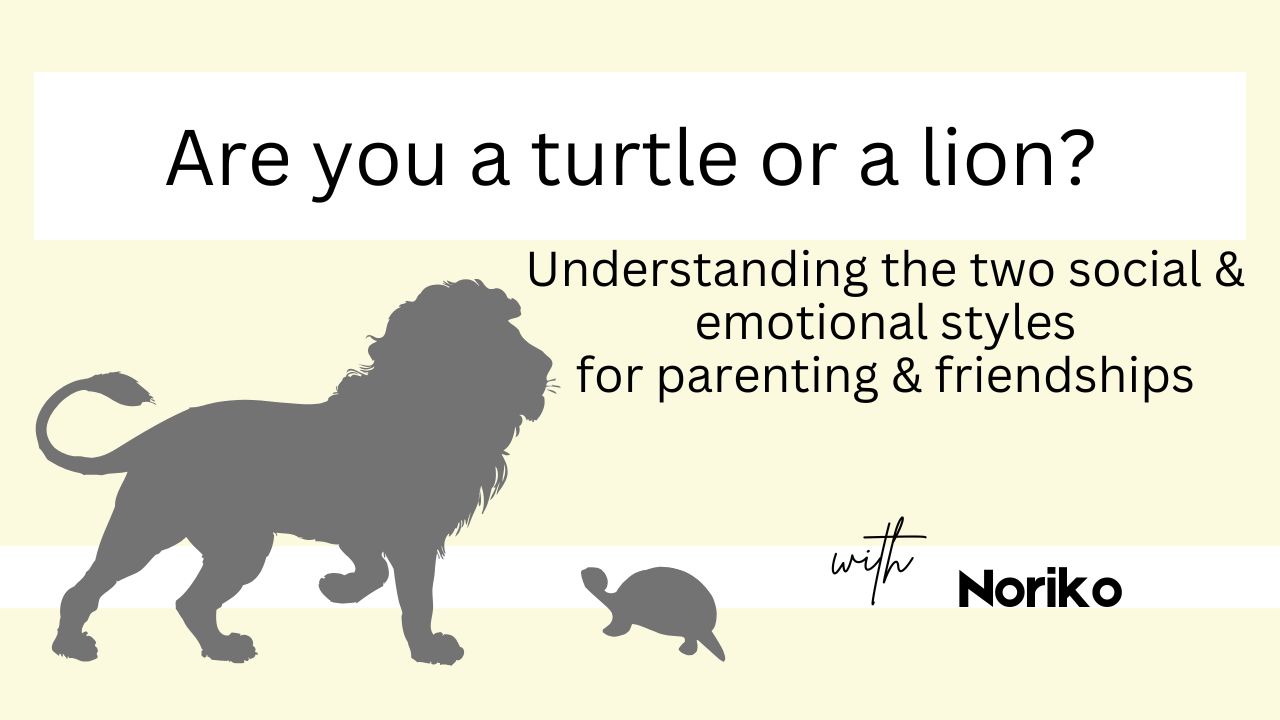
This is a common pattern in parent-child relationships, and also happen between siblings and friends.
🟢 Meet Tucker the Turtle
- Needs time to process before responding
- Retreats when overwhelmed or pressured
- Prefers quiet, slower-paced interactions
- Feels safest when given space and predictability
- Communicates through subtle cues, not a lot of words
✔ Tuckers aren’t ignoring you. They’re processing internally.
✔ When pushed too hard, Tuckers retreat further into their shell, making it less likely for them to come out.
🟡 Meet Lisa the Lion
- Needs verbal engagement to feel connected
- Thinks out loud—talking helps them process
- Fills silence with more words, questions, and energy
- Moves fast and expects quick responses
- Feels uneasy when someone doesn’t answer right away
✔ Lisas aren’t trying to overwhelm others. They’re seeking interaction.
✔ When someone withdraws, Lisas push harder, thinking more talking will help.
When Tuckers & Lisas Collide
A common parenting mistake is assuming Tucker needs more prompting when they really need less.
🚦 The more Lisa pushes, the more Tucker retreats.
🚦 The more Tucker pulls away, the more Lisa talks.
This can also lead to miscommunication in friendships and between siblings.
🔹 Lisa the parent might say: “Just tell me what’s wrong!” → But Tucker hears pressure and withdraws further.
🔹 Tucker the child might stay silent when upset → But Lisa assumes they don’t care and talks even more.
Sound familiar? Then read on!
🔹How to Help Tuckers & Lisas Communicate Better
✅ If You Are Lisa the Lion & Your Child is Tucker the Turtle:
- Pause and wait. Give them space to respond.
- Use fewer words. Try “I’m here” or “Tell me more”, THEN WAIT!!
- Match their energy. If they’re quiet, soften your tone and presence. Keep physical distance when talking if that helps you manage your emotions.
✅ If You Are Tucker the Turtle & Your Child is Lisa the Lion:
- Acknowledge the intensity without becoming intense. "WOW, I can see in your words and body are REALLY MAD about this!"
- Set gentle boundaries. “Let’s take turns talking so we can both share and so I can listen.”
- Lions can become more intense when they feel they are not being heard so first step is to show them you feel their pain or distress, not to tame the intensity. You don't need to agree with their pain or distress, but you must first let them know you heard it.
🔹How This Plays Out in Friendships:
Tuckers may feel overwhelmed by chatty and energetic friends.
Lisas may feel ignored when a friend doesn’t respond quickly.
What You Can Say to Your Child:
For a Tucker: “If your friend is talking a lot, try saying, ‘I need a sec to think.’”
For a Lisa: “If your friend is quiet, give them a moment before asking again.”
Next time you notice this dynamic, pause and adjust—give Tuckers space and acknowledge Lisa's need to be heard and connect.
Use this concept to help your child through their friendships too!
Small shifts create stronger connections.
Gratefully yours,
Noriko
ANNOUNCEMENTS:

Online Workshop
REGISTRATION COMING SOON!
Let's Talk About Friendships - 4 Visual Tools Parents Can Use to Help Their Child Understand How Friendships Develop
YES! NOTIFY ME WHEN REGISTRATION IS OPEN
Please Help Spread the Word!
The more awareness we bring to the importance of social skills development, the more schools and workplaces will recognize the importance of inclusivity and the need for meaningful social support.
Please share this link: Parenting REdefined Newsletter (www.NorikoAbenojar.com/subscribe) to friends, families, teachers, or other professionals - encourage them to subscribe so that they don't miss announcements and new newsletters.
Noriko Abenojar, MSW PPS
Parenting REdefined
www.SocialAndCognitiveLearningCenter.com
Instagram: @NorikoAbenojar
Facebook: Parenting REdefined by Noriko Abenojar MSW PPS






Responses